In this guide
There isn't one switch that works for everyone. What helps is stacking barriers between you and gambling: block access, protect your money, plan for urges, change the routines that pull you back in, and get more support when you need it.
You don't have to fix your entire life today. Make gambling harder to do today.
Start here
If you want to stop gambling today
- Remove access to the appsDelete them, log out, and block the ones you keep going back to.
- Move or restrict easy access to gambling moneyRemove saved cards, lower limits, keep less in the account you bet from.
- Tell one personNot everyone. One person who knows you're trying to stop.
- Decide what you will do when the urge hitsWrite it down now, while you're thinking clearly.
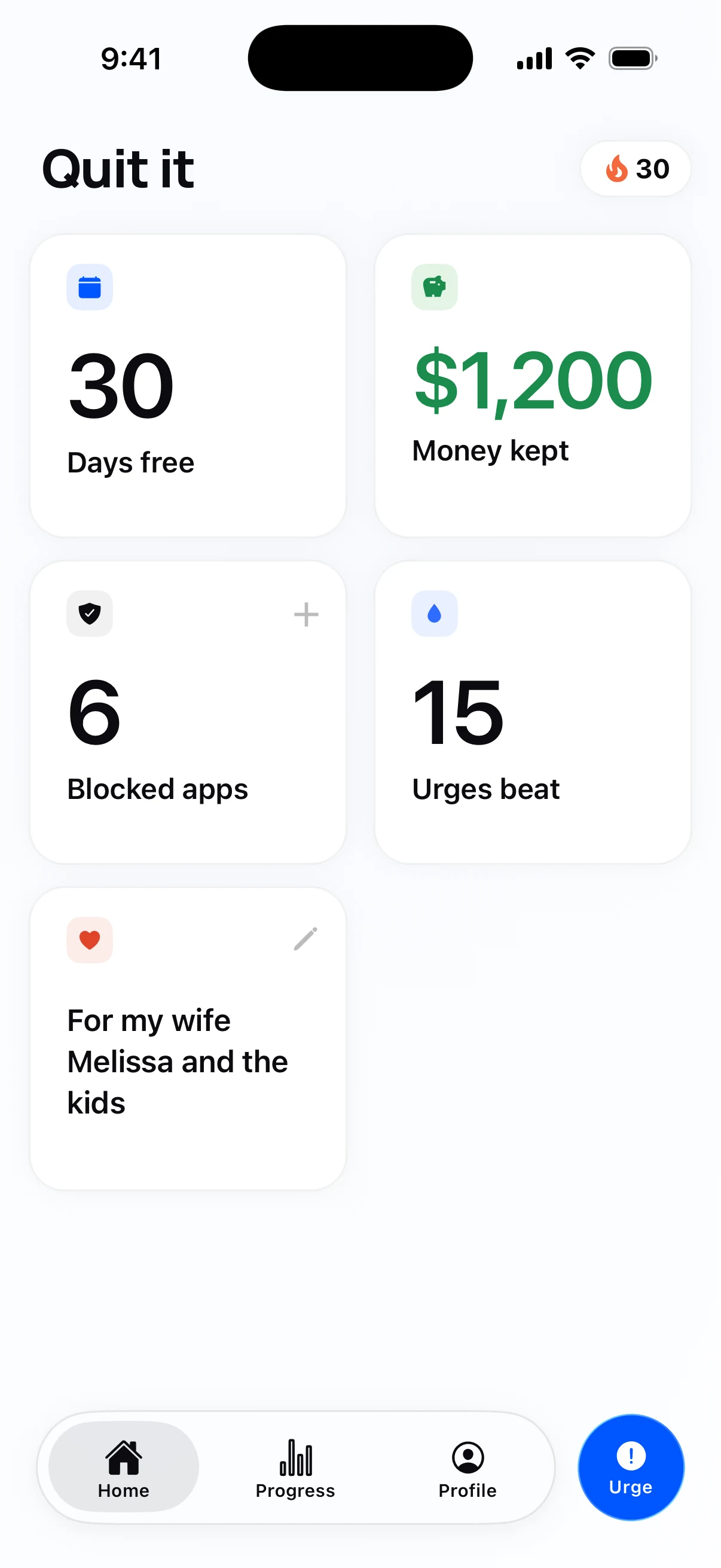
- Track the first 24 hoursDays free and money kept. Then do it again tomorrow.
Understand the loop you're in
One of the hardest parts of quitting is accepting that the money already lost is gone. The thought sounds reasonable:
One good bet and I'll get some of it back. Then I'll stop.
But that keeps the same cycle alive.
- Trigger
- Urge
- Bet
- Temporary relief
- Repeat
If you're quitting, forget getting back to even. You can stop from where you are, down as much as you're down.
The first win is not placing the next bet.
Make gambling harder to do
Online gambling removed almost every bit of friction between an urge and a bet. Your sportsbook, casino, prediction market, or trading account sits in your pocket all day.
Make gambling inconvenient.
Delete, log out, block
- Delete the apps.
- Log out of the accounts.
- Turn off notifications and promotional email.
- Unfollow accounts that put odds, parlays, picks, or wins in front of you.
- Block the apps you keep coming back to.
Deleting an app isn't enough if you'll reinstall it ten minutes later. A block that stays in place when the app comes back is stronger than the delete. The point is time between wanting to gamble and being able to gamble.
Self-exclude where you can
Many operators and jurisdictions offer self-exclusion, which can restrict your ability to gamble for a set period.1 If yours offer it, consider using it, and close accounts, unsubscribe from marketing, and leave loyalty programs while you're at it. None of this means you "should have been able to control it yourself." That's the point of a barrier: you set it up while you're thinking clearly, so you're not deciding from scratch during an urge.
Put distance between gambling and your money
Access to gambling is half the equation. The other half is access to money. Look at how money gets from your account into a bet and break that path: remove saved cards from gambling accounts, lower transfer or spending limits, keep less in the account you bet from, use bank gambling blocks where offered, or ask someone you trust to help add friction.
Don't measure recovery by what you could have won
You'll notice the bet you would have won and forget the losing bets that never happened. The useful number is how much money you're no longer putting at risk. It stays yours.
Have a plan for the next urge
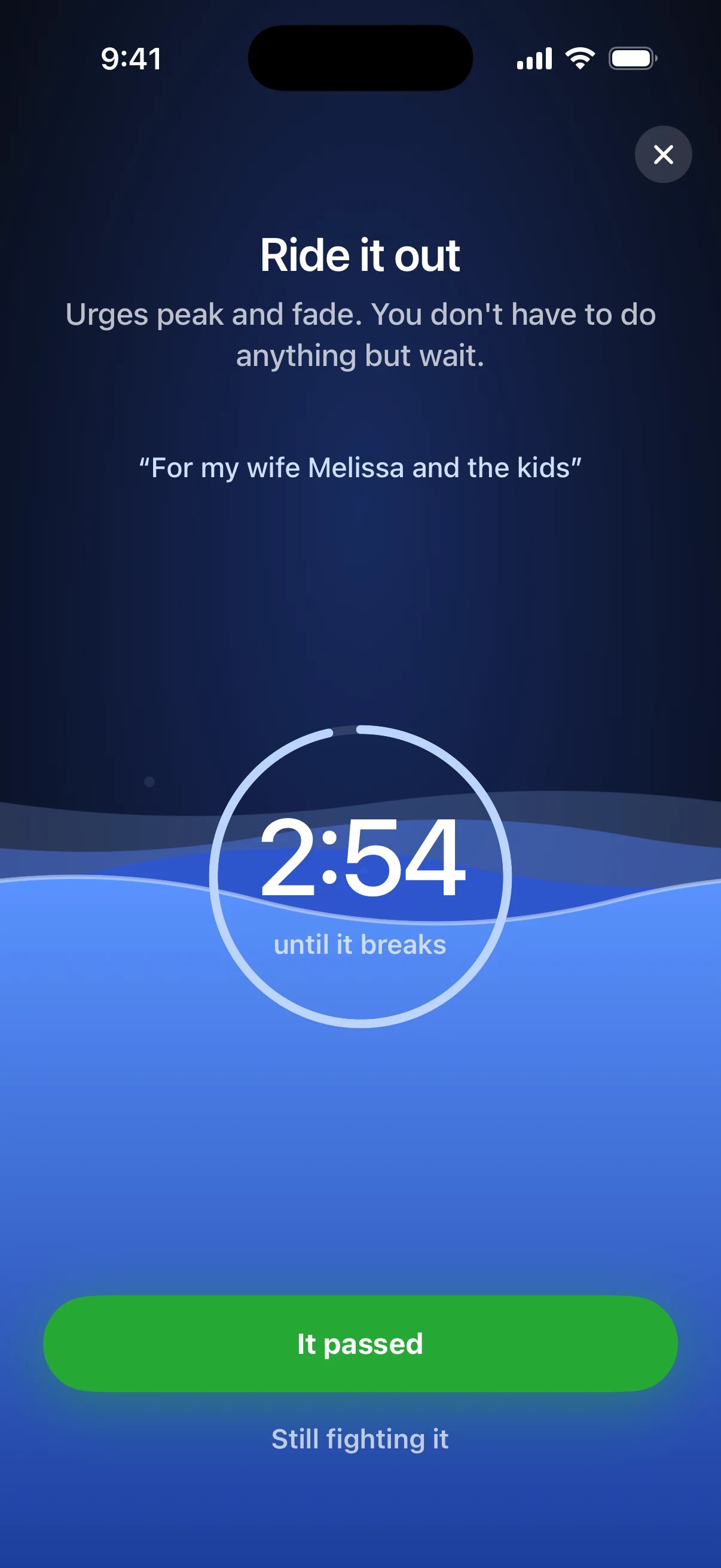
Don't build your plan around never wanting to gamble again. Build it around what to do when you do want to gamble.
You don't need to eliminate every urge. You need a plan for what happens when one shows up.
- Urge
- Wait ten minutes
- Change your environment
- Do something incompatible with betting
- Delay. Don't negotiate about whether this bet is okay. Give it ten minutes.
- Change your environment. Get away from the screen. Walk, shower, call someone.
- Read the reason you stopped. Write it down now, while you're sure, not during an urge.
You don't have to solve the rest of your life. You just have to avoid turning this moment into another bet.